How Much Does Brake Repair Cost in St Paul MN
Brake repair in St Paul typically runs between $150 and $600 per axle depending on what needs replacing, with most straightforward pad and rotor jobs landing in the $200 to $350 range. A mobile mechanic handles the same work at your driveway, often without the shop markup, and the job usually takes one to two hours on site.
Key takeaways
- Typical brake repair cost: $150 to $600 per axle for most passenger vehicles in the area
- The biggest cost driver is whether you need rotors replaced alongside the pads, rotors add $80 to $200 per axle in parts alone
- The cheapest honest path is catching brake wear early, when pads alone need swapping and rotors can be kept
What does brake repair cost in St Paul?
The table below reflects real market ranges for common brake jobs. These are not quotes from any single shop or mechanic. They are what most mobile mechanics and independent shops around here charge based on typical labor rates and mid-grade parts. Dealer pricing runs higher across the board.
Brake repair cost by service type
| Service | Typical market range | Time on site |
|---|---|---|
| Brake pad replacement (one axle) | $150 to $250 | 45 to 75 minutes |
| Brake pad and rotor replacement (one axle) | $220 to $400 | 1 to 2 hours |
| Full brake job (all four corners, pads and rotors) | $450 to $800 | 2.5 to 4 hours |
| Brake caliper replacement (one side) | $180 to $350 | 1 to 1.5 hours |
| Brake line replacement | $200 to $500 | 1.5 to 3 hours |
| Brake fluid flush | $80 to $130 | 30 to 45 minutes |
What changes the price?
Several real factors push a brake job up or down. Knowing them helps you understand an estimate before you agree to anything.
- Rotor condition: if rotors measure below minimum thickness or show deep grooves and heat discoloration, they have to be replaced, not resurfaced. That adds $80 to $200 per axle in parts.
- Vehicle type: trucks, SUVs, and performance cars use larger brake components that cost more. A full-size pickup can run $100 to $150 more than a compact sedan for the same job.
- Parts grade: economy pads cost $25 to $50 per axle. OEM-equivalent or ceramic pads run $60 to $120. The difference shows up in noise, dust, and how long they last.
- Seized hardware: in Minnesota winters, caliper slide pins and bracket hardware corrode and seize. Freeing or replacing them adds 30 to 60 minutes of labor.
- Caliper condition: a stuck or leaking caliper is not a pad job anymore. Caliper replacement adds $150 to $250 per side including the part.
- How long you waited: worn pads that eat into the rotor turn a $200 job into a $350 job. Metal-on-metal contact can also damage the caliper, which pushes the bill even higher.
- Front vs. rear: rear brakes on vehicles with drum-style parking brakes or electronic parking brake actuators cost more to service than straightforward front disc setups.
Mobile mechanic vs shop: does it actually cost more?
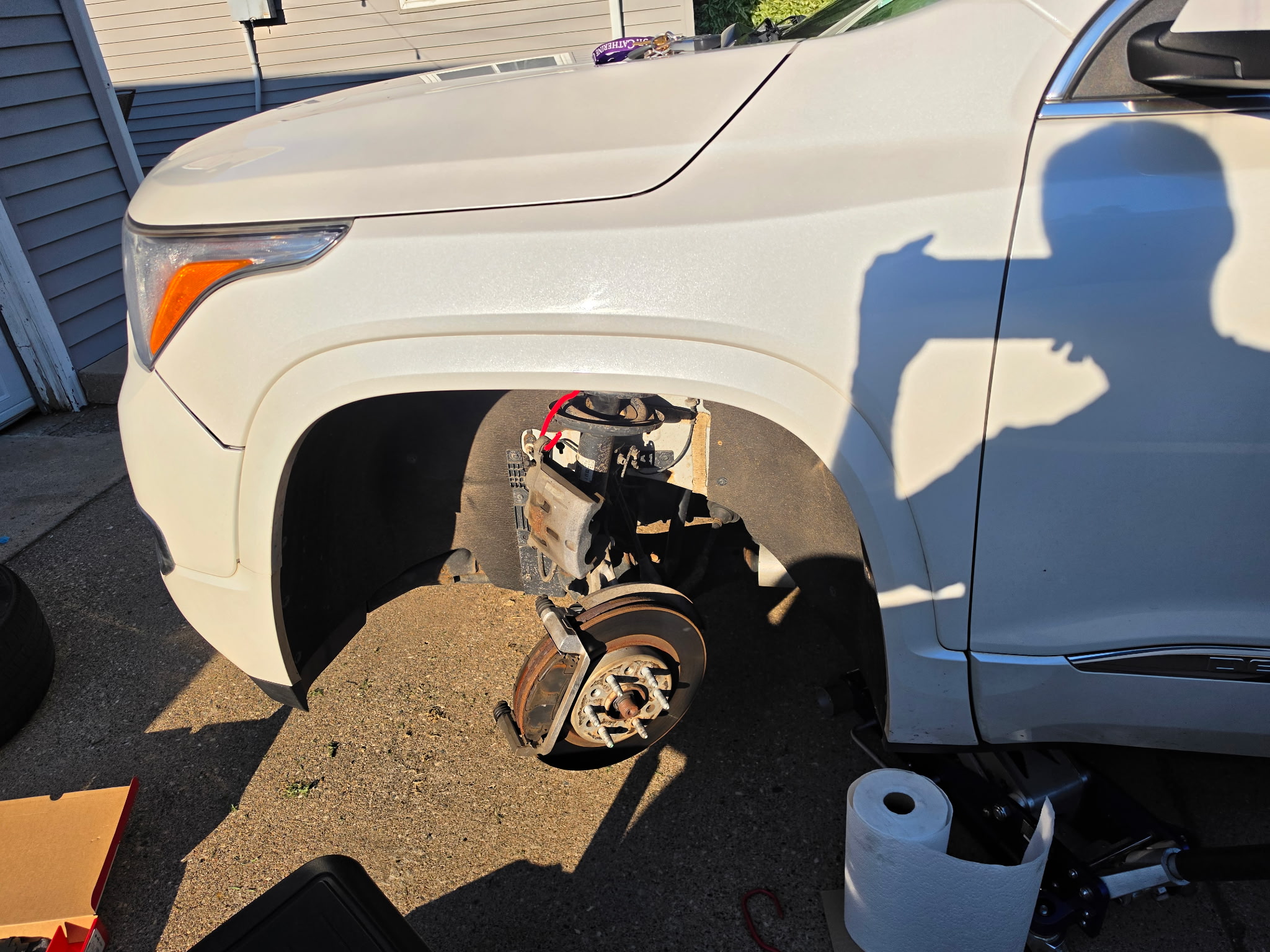
The short answer is no, not usually. Independent mobile mechanics skip the building overhead that shops pass on to customers. You are not paying for a lift bay, a waiting room, or a service writer. Most mobile mechanics around here charge roughly the same labor rate as independent shops, and some charge less. The real savings is time: no tow, no waiting for a ride, no taking half a day off work. Backyard Mobile Repair comes to your driveway and does the work there.
Mobile mechanic vs shop: what you actually pay for
| Cost factor | Mobile mechanic | Traditional shop |
|---|---|---|
| Labor rate (typical) | $80 to $120 per hour | $90 to $140 per hour |
| Tow fee if car is unsafe to drive | $0 (mechanic comes to you) | $80 to $150 to get it there |
| Time cost to customer | Work happens at home or work | Drop off, wait or get a ride, pick up |
| Parts markup | Comparable to independent shops | Comparable, dealers charge more |
| Diagnostic fee | Often included in repair | $80 to $150 at many shops |
The case for mobile is strongest when the vehicle is borderline unsafe to drive. Grinding brakes on icy roads are not a situation where you want to nurse the car across town. A mechanic who comes to you removes that risk entirely. You can find more detail on how mobile brake service works in the Resource Hub.
When should you replace brake pads vs the whole assembly?
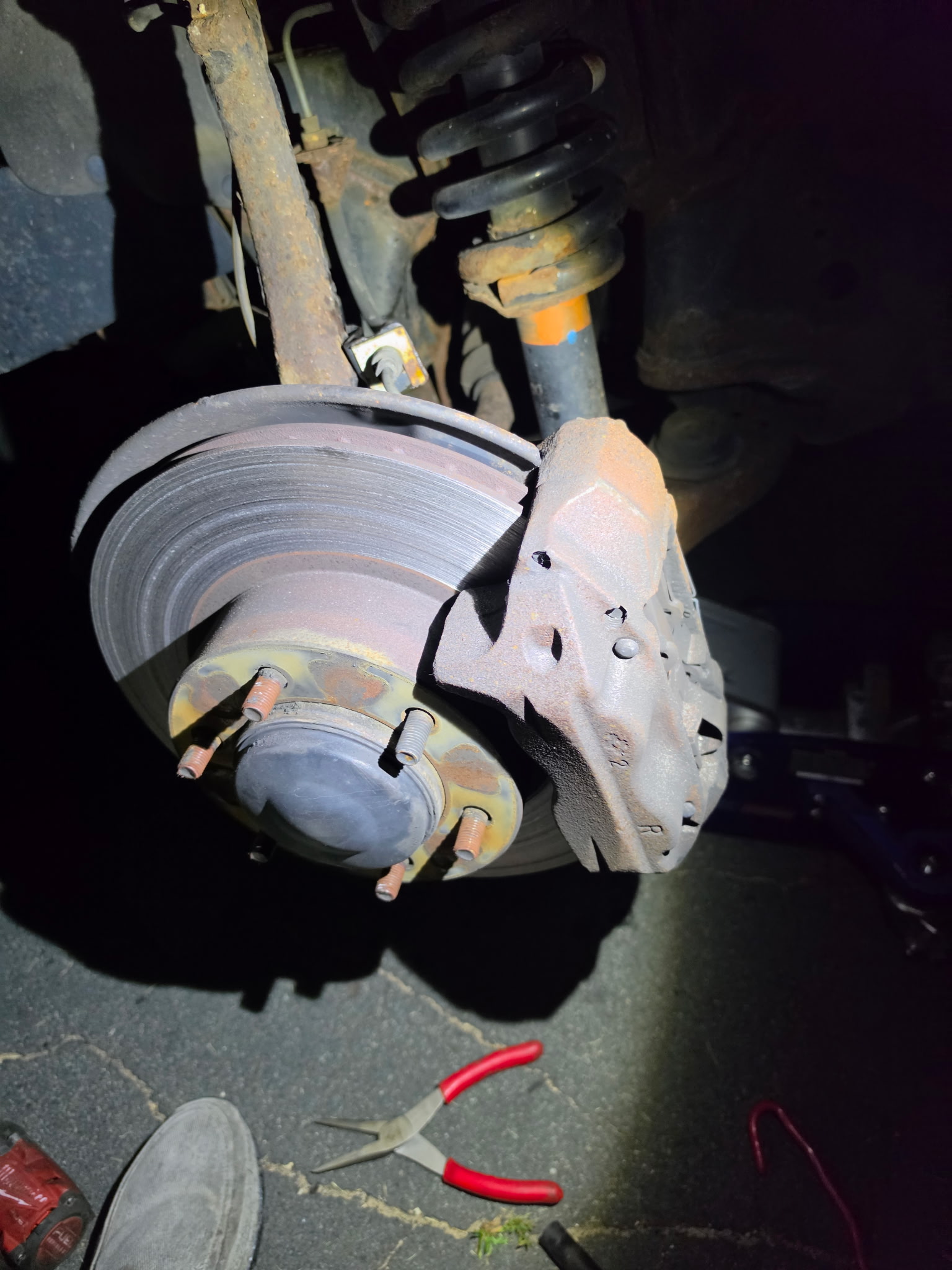
Pads alone are enough when the rotor surface is smooth, the thickness is above the minimum spec, and there is no scoring or warping. Most passenger car rotors last through two pad changes if the first set is replaced before it goes metal-on-metal. Once you hear grinding instead of squealing, the rotor is probably damaged and needs to come off.
A good rule of thumb: if a rotor is within 1mm of the minimum thickness stamped on it, replace it now. Machining a borderline rotor thin makes it more prone to warping, and you will be back doing the job again sooner than you should be.
Signs your brakes need attention now
- Squealing or squeaking when you apply the brakes (wear indicator telling you pads are low)
- Grinding or metal-on-metal sound (pads are gone, rotor is being damaged)
- Vibration or pulsing through the brake pedal (warped rotor)
- Pulling to one side under braking (stuck caliper or uneven pad wear)
- Soft or spongy pedal that sinks toward the floor (fluid or caliper issue)
Common questions
How much does mobile brake pad replacement cost?
Most mobile mechanics around here charge $150 to $250 per axle for brake pad replacement on a standard passenger vehicle, parts and labor included. Trucks and larger SUVs run toward the higher end. Adding rotors brings the total to $220 to $400 per axle.
Can a mobile mechanic do brake and rotor replacement?
Yes. Brake and rotor replacement does not require a lift for most vehicles. A floor jack and jack stands are enough, and a mobile mechanic carries that equipment. The job takes one to two hours per axle on site at your driveway or parking spot.
How do I know if I need brake line replacement vs just pads?
Brake line problems show up as a soft or spongy pedal, visible fluid leaking near the wheels or under the car, or a pedal that slowly sinks to the floor. Worn pads cause noise and reduced stopping power but the pedal feel stays firm. If you are unsure, a mobile mechanic can inspect the system before recommending a repair.
Find us on Google Call (651) 888-9595 anytime.
Backyard Mobile Repair - mobile mechanic serving St Paul, MN. (651) 888-9595.


Comments
Post a Comment