That Rusty Brake Caliper Under Your Car Is Telling You Something
There is a moment most drivers have experienced. You hear a grinding noise, or the car pulls to one side when you brake, or the pedal feels a little off. You know something is wrong, but you keep driving anyway because getting to a shop feels like a whole production. That hesitation makes sense. It does not make it safe.
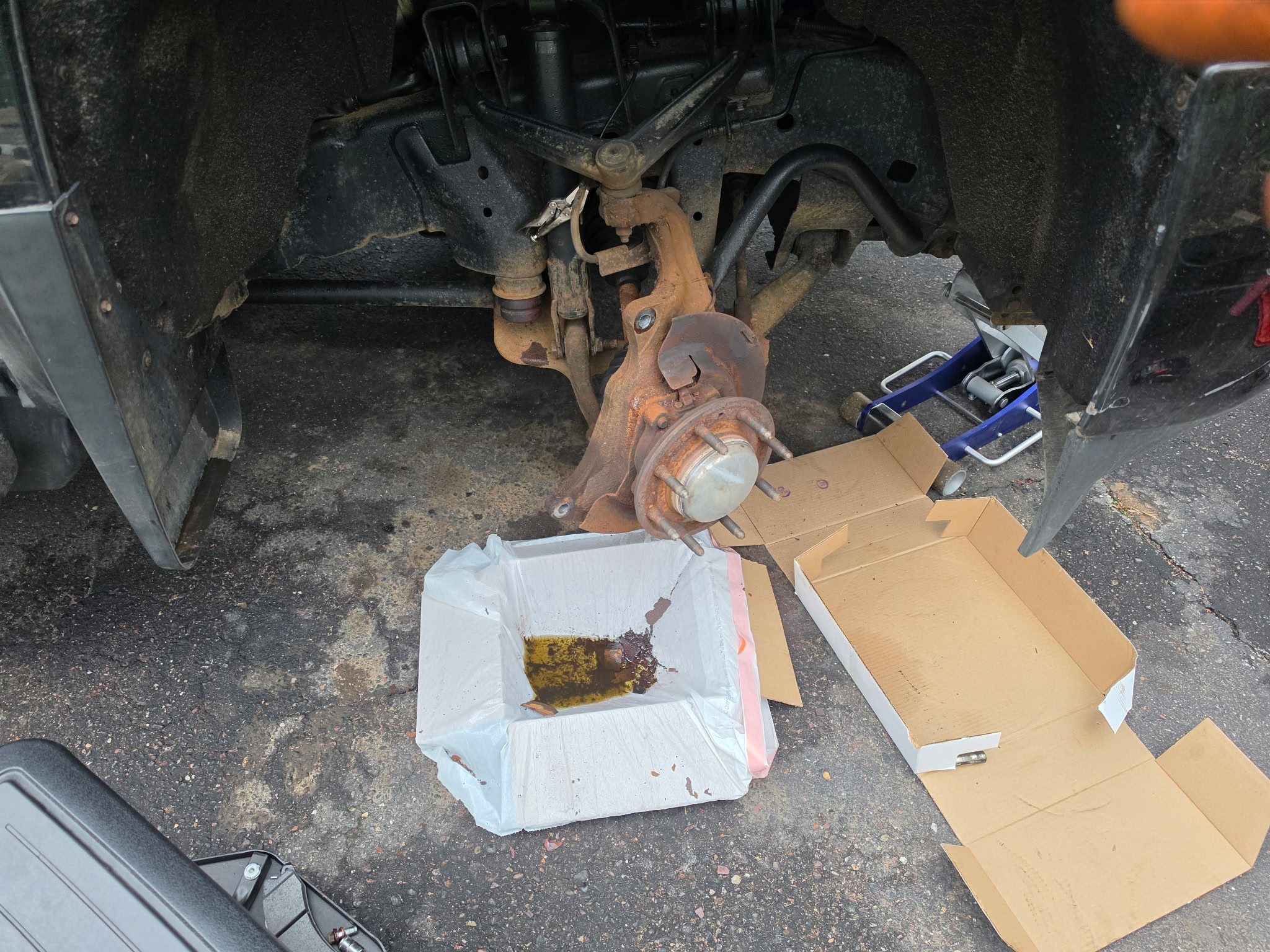
What you see in the photo above is a brake caliper that was pulled off a vehicle during an on-site repair. It is sitting on the ground next to the tools and boxes that came out of the mobile mechanic's setup, with the undercarriage of the car still visible above it. That caliper is heavily rusted and corroded. It is not a worst-case scenario from a junkyard. It came off a car that was being driven.
What a Brake Caliper Actually Does
Most people know brake pads wear down. Fewer people think about the caliper, which is the hydraulic clamp that squeezes those pads against the rotor when you press the brake pedal. The caliper has to move freely every single time you brake. When it cannot, you have a problem.
Calipers have pistons inside them that extend and retract with hydraulic pressure. There are rubber seals and boots around those pistons. Over time, those seals crack. Moisture gets in. Corrosion builds up. The piston stops retracting cleanly after you release the pedal, which means the brake pad stays in contact with the rotor even when you are not braking. That constant friction generates heat, wears down the pad faster than normal, and puts stress on the rotor.
Why Minnesota Winters Accelerate This Problem
Road salt is extremely corrosive to brake hardware. In St. Paul, vehicles get hit with brine and salt from roughly November through March. That chemical exposure works into every crevice of your brake assembly. The caliper bracket, the slide pins, the piston housing. All of it is exposed to the underside of the car where salt and moisture collect and sit.
Slide pins are a good example of how this plays out. They are small threaded pins that allow the caliper to float and self-center on the rotor. When they seize from corrosion, the caliper cannot move properly, and you end up with uneven pad wear, pulling, and heat buildup. Replacing the pads without addressing seized slide pins is a temporary fix at best.
Signs a Caliper Has Gone Bad
A seized caliper has a few recognizable symptoms. The car pulling to one side under braking is one of the more common ones. You might also notice one wheel feeling hot to the touch after driving, or a burning smell after normal stops. Uneven pad wear, where one pad is nearly gone and the other still has material, is another indicator.
Sometimes the caliper sticks in the engaged position. Sometimes it sticks in the released position, which means that side is barely braking at all. Neither situation is one you want to discover in traffic.
Why Mobile Brake Service Makes Sense for This Kind of Job
A caliper replacement is not a quick roadside fix, but it is absolutely something a trained mobile mechanic can handle at your home or workplace. The photo shows exactly that setup. The car is stationary, the wheel is off, and the work is happening on the ground with the right tools. No tow truck. No waiting room. No leaving your car somewhere overnight.
For a lot of people in the St. Paul area, the barrier to getting brake work done is logistical. Getting a car to a shop when the brakes are already questionable feels like a risk. Having someone come to you removes that barrier entirely. You can watch the work happen, ask questions, and see the old parts before they are replaced.
Brake work done on your own driveway is still real brake work. The same parts, the same process, just without the overhead of a shop building.
When to Stop Waiting
If your brakes are making noise, pulling, or just feel different than they used to, that is worth a look before it turns into a rotor replacement on top of a caliper replacement. A rusted caliper does not fix itself, and the longer a seized piston stays engaged, the more damage it does to the surrounding hardware.
Backyard Mobile Repair handles brake repairs across the St. Paul area, including caliper replacement, pad and rotor work, and slide pin service. If you want to understand what is actually going on with your brakes before committing to anything, you can also check out the mobile mechanic resource hub for more information, or reach out to schedule a look at their St. Paul service page. Sometimes a conversation is the right first step.
Find us on Google Call (651) 888-9595 anytime.


Comments
Post a Comment